
Tool comparison
Best apps to learn Chinese speaking in 2026
The best app for learning Chinese speaking depends on what problem you are trying to solve. No single app is best for every learner, so the fair question is: which tool gives you the speaking practice you are missing right now?
Quick recommendation
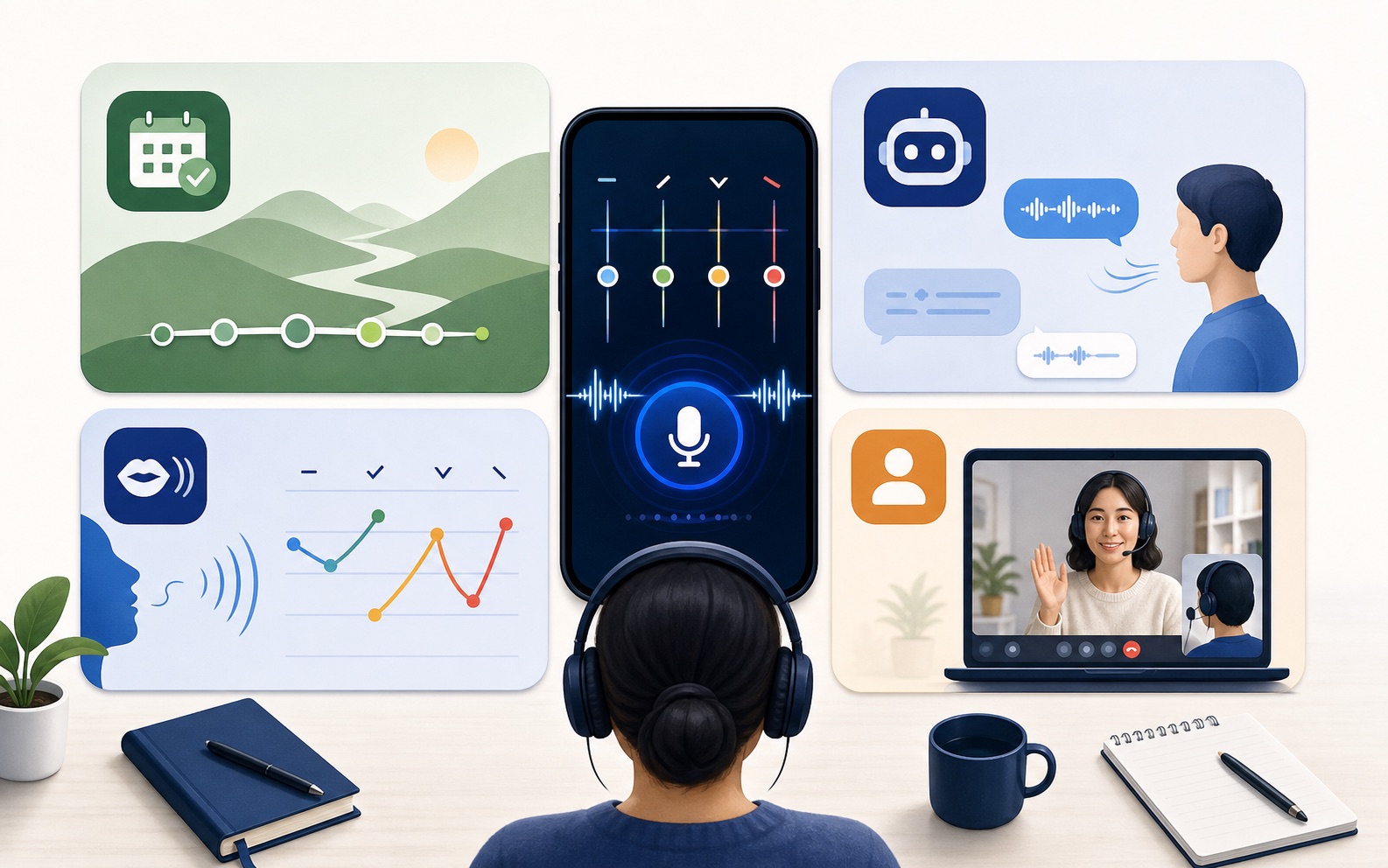
Use a habit app for routine, a pronunciation tool for tones, AI conversation practice for frequent spoken turns, and a human tutor when nuance, correction, or accountability matters most.
| Tool type | Best for | Watch out for |
|---|---|---|
| Habit apps | Consistency and beginner exposure | Limited spontaneous conversation |
| Pronunciation tools | Pinyin, tones, and repeat-after-me practice | Drills do not replace live response practice |
| AI conversation | Frequent low-pressure speaking reps | Needs review and judgment for nuance |
| Human tutors | Real interaction, correction, and accountability | Costs more and requires scheduling |
Vocabulary and habit apps
Apps such as Duolingo are strongest when you want a low-friction daily habit. They can help learners keep contact with Mandarin through short lessons, review, listening, and basic sentence patterns. Duolingo's own site describes its courses as covering reading, writing, listening, and speaking skills. That breadth is useful, but it also means the app is not only a speaking coach.
Use this category if you need consistency, beginner vocabulary, and a friendly routine. Do not rely on it as your only speaking system if your main goal is spontaneous conversation.
Pronunciation-focused apps
Chinese pronunciation is unforgiving because tones carry meaning. Apps that emphasize speech recognition, pinyin, tone pairs, and repeat-after-me exercises can be valuable early on. HelloChinese, for example, presents itself as a Mandarin learning app with speech recognition for pronunciation practice. These tools can help you hear and repeat more accurately before you add open conversation.
Their limitation is that repeating a sentence is not the same as deciding what to say next. Pronunciation drills are necessary for many learners, but they should feed into conversation practice.
AI Chinese conversation apps
AI conversation apps are useful when you need frequent speaking reps without scheduling pressure. A good AI practice tool lets you answer out loud, make mistakes, repeat, and try again. The best use case is not replacing all human interaction; it is increasing the number of spoken turns you get each week.
Elo fits in this category through AI Coach practice with connected transcript, review, Notebook, and learner memory. The goal is to make short practice sessions easier to repeat, then carry useful mistakes into the next lesson instead of letting them disappear.
Language exchanges and live tutors
Language exchanges can be excellent for real communication, especially if you are comfortable managing an uneven conversation. They are less predictable for structured correction. Live tutors or coaches are better when you need a person to adapt, interrupt naturally, explain nuance, and hold you to a real conversational standard.
The tradeoff is cost and scheduling. Many learners benefit from using AI for daily reps and a human coach for depth, correction, and social pressure.
How to choose
- Choose a habit app if you need routine and beginner exposure.
- Choose pronunciation tools if tones and pinyin are the bottleneck.
- Choose AI conversation practice if you need many low-pressure spoken turns.
- Choose a human tutor or coach if you need real interaction, nuance, and accountability.
A strong Chinese speaking plan often combines more than one tool: one app for habit, one practice format for speaking frequency, and one human feedback source for reality.
Try a speaking-first practice flow
Elo offers AI-only practice with Elaine and Lee. When recording-owned post-call evidence is ready, transcript-backed Review, learner-saved Notebook entries, and eligible learner memory can carry a useful practice target forward. Review may remain processing or limited.
Explore AI Chinese CoachFAQ
Is Duolingo good for Chinese speaking?
It can help with daily exposure and basic language habits, but many learners will need extra speaking, pronunciation, or live conversation practice to become comfortable answering spontaneously.
What is better than Duolingo for Chinese speaking?
For speaking specifically, pronunciation tools, AI conversation apps, language exchanges, and live tutors may all be better in different situations. The right choice depends on whether your current bottleneck is tones, confidence, speed, correction, or real conversation pressure.
Can AI replace a Chinese tutor?
AI can increase practice frequency and reduce speaking anxiety, but a skilled human tutor is still stronger for cultural nuance, relationship, natural interruption, and feedback that depends on the full context of a real conversation.