
HSKK preparation
HSKK self introduction: structure and speaking practice
A self introduction is one of the easiest HSKK tasks to prepare badly. A memorized paragraph may sound smooth at home, then collapse when the timing, microphone, or follow-up prompt changes.
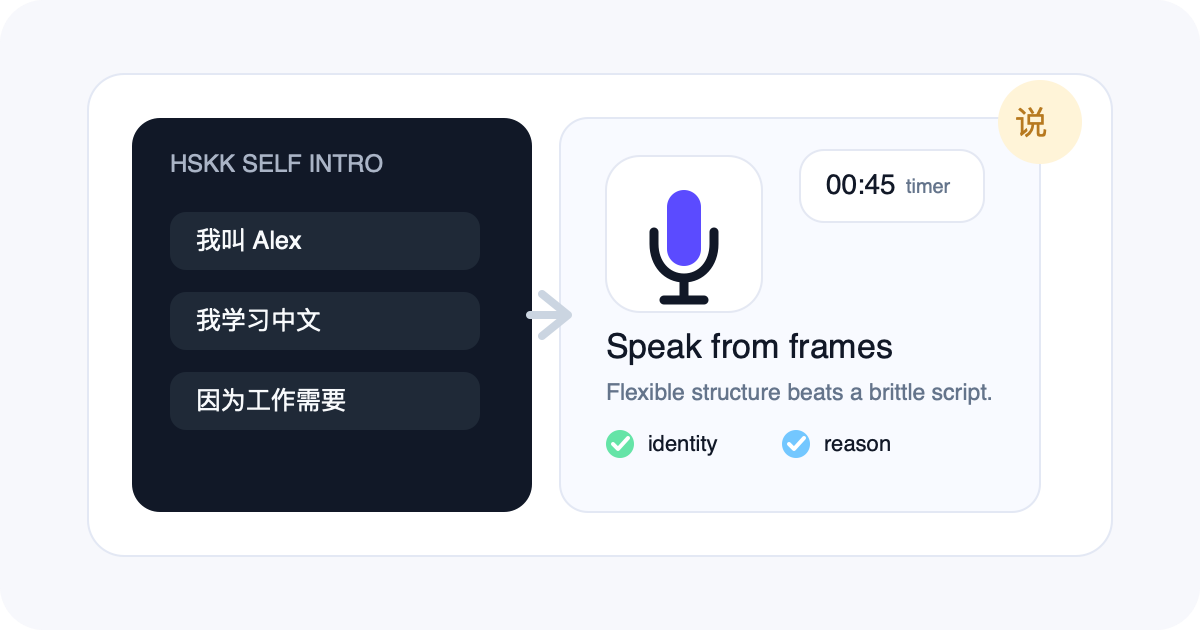
Use frames, not one brittle script
Prepare a flexible structure: who you are, what you study or do, one personal detail, and why Chinese matters to you. Then practice several versions under time pressure.
A simple HSKK self-introduction structure
Keep the structure clear enough that you can recover if you forget a sentence. For most learners, four parts are enough: basic identity, background, personal detail, and Chinese-learning reason. You do not need a dramatic story. You need clear Mandarin that you can say under recording conditions.
| Part | Function | Example frame |
|---|---|---|
| Opening | Start clearly | 大家好,我叫... |
| Background | Give context | 我现在学习... / 我在...工作 |
| Personal detail | Sound human | 我平时喜欢... |
| Reason | Explain motivation | 我学习中文是因为... |
Do not overfill the answer
Many learners try to include hometown, job, hobbies, family, travel, and future goals in one answer. That creates pressure and makes pronunciation worse. A shorter answer with clean tones, complete sentences, and natural pacing usually beats a long answer that feels memorized.
A useful test is whether you can say the introduction three different ways. If you can only recite one exact paragraph, you have memorized text, not prepared speech.
Practice with a timer
HSKK practice should include timing early, not only in the final week. Set a short timer, answer once, then listen back. Mark only one problem: missing word, weak tone, long pause, or unclear ending. Repeat with that one target.
If you practice without recording yourself, you may not notice that your answer slows down after the first sentence. The microphone changes the pressure. Practicing with a recording makes the real exam feel less surprising.
Use AI and human feedback differently
AI practice is useful for repetition. You can try several versions, repair a sentence, and become less embarrassed about speaking out loud. Human feedback is useful for judgment: whether the answer sounds natural, whether your tone issue changes meaning, and whether your self introduction fits the exam level.
Practice HSK speaking before the exam
Elo helps learners combine AI speaking practice with Elaine or Lee and short pronunciation checks so HSKK preparation includes spoken output, not only silent study. Elo offers AI-only practice, not human tutoring.
Explore HSK speaking practiceFAQ
How should I structure an HSKK self introduction?
Use four parts: basic identity, study or work background, one personal detail, and one reason you are learning Chinese. Keep it flexible enough to say in more than one way.
Should I memorize my HSKK self introduction?
Memorize sentence frames and useful phrases, not one brittle paragraph. A flexible answer is easier to recover when you pause or forget a word.
How can I practice HSKK speaking under time pressure?
Use a timer, record yourself, listen once, choose one correction target, and repeat. Add AI or human feedback when you stop hearing your own patterns.